
On this page
- The Shock That Already Happened (And the Recovery That Pretended It Didn’t)
- The Market Is Already Voting (Here Are the Numbers)
- Semiconductors: Two Forces Pulling Opposite Ways
- Hyperscalers Are Diverging and That Is the Whole Story
- Capex Is the Swing Variable and Nobody Knows
- The Froth Is Hiding in Plain Sight
- Who Actually Wins If Models Keep Getting Cheap
- The Geopolitical Backstop (For Now)
- Three Scenarios, One Bet
- The Bet Nobody Can Price
The Shock That Already Happened (And the Recovery That Pretended It Didn’t)
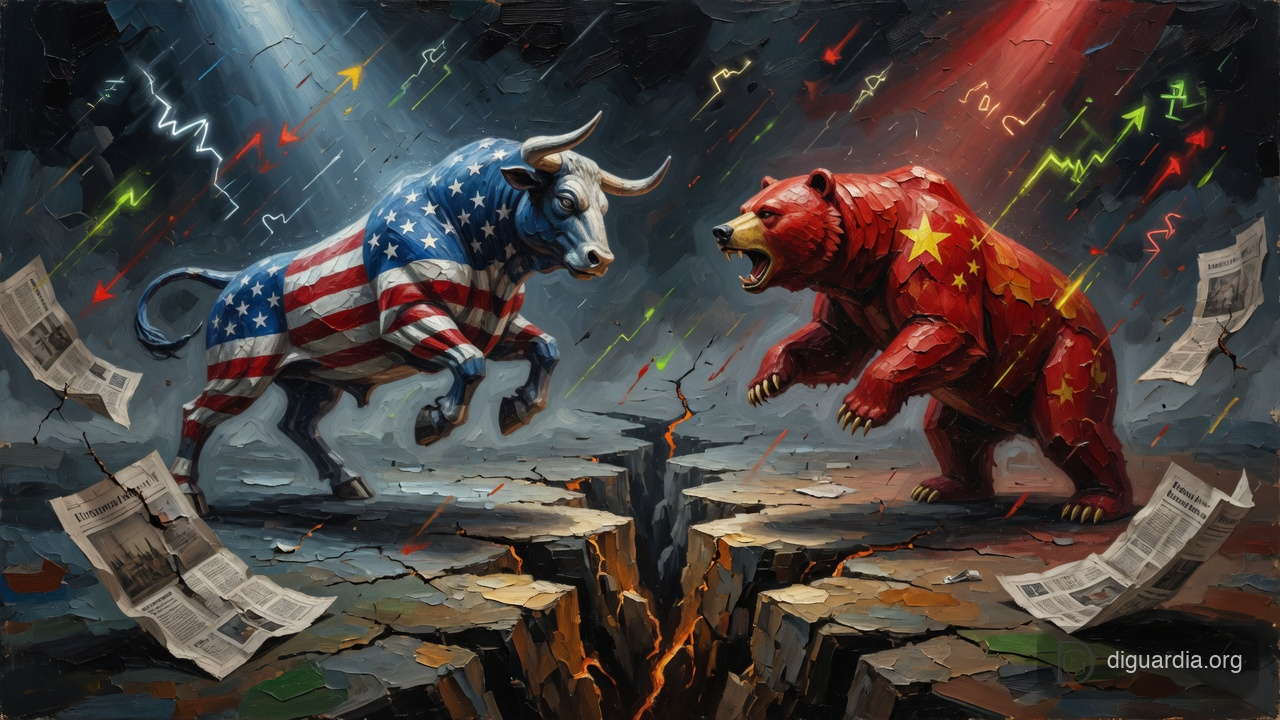
On January 27, 2025, Nvidia lost $600 billion in market cap in a single day. A 17% crash on one stock. Broadcom dropped 17%. ASML dropped 7%. The trigger was a Chinese model called DeepSeek R1, which Andreessen called “AI’s Sputnik moment.”
The thesis that broke was simple and expensive: unlimited American capex equals an insurmountable lead. DeepSeek proved you could get frontier-class results on inferior chips for a fraction of the cost. The market repriced the entire cost curve overnight.
Then everyone forgot. By late 2025, Nvidia crossed $5 trillion. Broadcom was up 49% on the year. ASML up 36%. The capex did not slow. It accelerated into 2026. Satya Nadella dusted off the Jevons paradox: cheaper AI means more adoption means more compute, not less. Problem solved, back to buying GPUs.
Except the problem is not solved. It just moved.
The Market Is Already Voting (Here Are the Numbers)
Right now, as I write this, the AI stocks are not moving together. They are splitting. And the split tells you exactly what the market is thinking about the China-US AI price war.
| Ticker | Price | Market Cap | Fwd P/E | Perf Mo | Perf Yr |
|---|---|---|---|---|---|
| NVDA | 194.83 | 4.71T | 15.4 | -12.6% | +23.9% |
| AVGO | 360.45 | 1.71T | 18.6 | -25.2% | +33.6% |
| ASML | 1769 | 682B | 34.5 | +3.8% | +121% |
| MSFT | 390.49 | 2.90T | 20.1 | -11.5% | -20.5% |
| GOOG | 356.18 | 4.34T | 24.2 | -0.6% | +98.1% |
| META | 582.90 | 1.48T | 16.7 | -2.5% | -18.3% |
| AMZN | 242.67 | 2.61T | 24.1 | -5.4% | +10.3% |
| AMD | 517.82 | 844B | 39.0 | -0.7% | +274% |
| ARM | 315.28 | 335B | 104.5 | -21.7% | +104% |
| SMCI | 27.22 | 17.6B | 8.6 | -45.7% | — |
Read that table the way a trader would. Google is up 98% on the year while Microsoft is down 20%. Same business, same AI bet, opposite result. The market is not pricing “AI good” or “AI bad.” It is pricing capital efficiency, and it is punishing the companies spending the most with the least to show for it.
Semiconductors: Two Forces Pulling Opposite Ways
The semiconductor stocks are where the price war hits hardest, and the bull and bear cases are both true at the same time. That is the whole problem.
The bull case is volume. Jevons paradox, for real. Cheaper tokens mean 10 to 100x more queries, more agents, more inference. Every Chinese model that drops prices to a dollar per million tokens creates demand that did not exist before. Nvidia’s forward P/E is 15.4 with a PEG of 0.33. That is the market pricing in enormous earnings growth. If inference volume compounds, that multiple is cheap.
The bear case is margin. If Chinese labs keep proving you do not need top-shelf silicon to compete, the premium Nvidia can charge erodes. Hyperscalers build custom silicon, AWS ships more Trainium, Broadcom’s ASIC business grows. The canary is already singing: Super Micro Computer is down 46% in a month. Server assembler margins compress first. That is not a one-off. That is the leading edge.
Net: volume wins if inference demand is elastic enough to absorb the price collapse. Every quarterly capex order is the live test, and the test is happening right now.

Hyperscalers Are Diverging and That Is the Whole Story
Google up 98%, Microsoft down 20%, Meta down 18%. Same year, same industry, opposite returns. This is not noise. This is the market rendering a verdict on AI spend ROI.
Microsoft and Meta are the heaviest capex spenders. They are also the most skeptical holdings. Google runs the cheapest frontier strategy, Gemini 3.5 Flash at $1.31 per million tokens, and it has diversified ad cashflow that does not depend on AI monetizing instantly. The market is rewarding one and punishing the other for the exact same reason.
Every hyperscaler earnings call is now a referendum on AI monetization. Hit the bar and you add hundreds of billions in market cap. Miss it and you lose them. Amazon sits in the middle, up 10%, because AWS inference revenue is ramping but the pure-AI narrative is weaker. There is no safe harbor in this trade.
Capex Is the Swing Variable and Nobody Knows
Here is the single variable that decides everything: does the capex outrun the revenue?
The bears say spend is running 3 to 5x ahead of AI revenue, the monetization gap is widening, and we are in a bubble that just has not popped yet. The bulls say enterprise AI adoption is still early, inference revenue is compounding, and sovereign AI deals added a whole new buyer class in 2026.
The tail risk nobody talks about enough: if a Chinese lab ships a true number-one frontier open model, not just “good enough” but actually the best, the barrier to competing collapses. Startups and nations build on free weights. Hyperscaler pricing power on AI services drops overnight. This is the scenario the DeepSeek shock hinted at but never finalized. It is low probability, but it is the one that re-shocks the market the way January 2025 did.
The Froth Is Hiding in Plain Sight
If you want to know where the fragility is, look at the multiples where the narrative is running ahead of the earnings.
ARM trades at a forward P/E of 104 with a PEG of 3.4. It is up 188% year to date. That is priced for absolute perfection. Any crack in the AI narrative and that name corrects the hardest.
AMD is up 142% YTD at a forward P/E of 39. Speculative semis, fully exposed if GPU demand disappoints a single quarter. Nvidia at a 15 forward multiple is the de-risked one in the basket, because it already corrected and the growth is still in the price.
The implication is rotation risk. If the narrative softens even slightly, capital flees the high-multiple speculative names, ARM and AMD, and consolidates in the cash-generative incumbents, Nvidia and Google. Expect sharp intra-sector dispersion, not a broad semis rally.
Who Actually Wins If Models Keep Getting Cheap
The picks-and-shovels monopolies win the defensive trade. ASML is up 65% YTD and 121% on the year, and it is the least exposed name to model commoditization because it sells the EUV machines every fab needs regardless of whose model is winning. Fab capex keeps rising. That is the cleanest AI pick there is.
Nvidia’s CUDA ecosystem is a software lock-in moat beyond the raw chips. It is more defensible than pure hardware, and it is why Nvidia recovers from every shock while pure assemblers like SMCI do not. The losers are the undifferentiated ones: generic GPU alternatives without a software ecosystem, server assemblers without pricing power.
The flip side is the commoditization beneficiaries. Application layers and cloud platforms that resell cheap inference win margin expansion as their input cost drops. Enterprise IT benefits from falling API costs. The pure model-makers, OpenAI and Anthropic, face gross margin squeeze, but they are private so there is no clean public proxy. The closest are Microsoft, via its OpenAI stake and Azure, and Google, via Gemini. And the market is currently pricing Google’s cheaper-model strategy as the winner.
The Geopolitical Backstop (For Now)
Near term, US semis have a geopolitical floor. China is compute-bottlenecked. DeepSeek R2 was delayed. US export controls are biting. As long as China cannot scale compute, it must buy smuggled or older stock, and that supports US chip demand.
The long-term risk is the one nobody can hedge. If China’s algorithmic efficiency leapfrogs its hardware limits, export controls lose their leverage entirely. It is a binary outcome: either the controls hold and US semis keep their edge, or China engineers around them and the whole control regime becomes a historical footnote.
Three Scenarios, One Bet
Here is how I see it, ordered by probability.
1. Jevons wins (base case, roughly 55%). Cheaper models drive inference volume to explode. Capex is justified. Semis hold, hyperscalers monetize. Winners: Nvidia on volume, Google on efficiency, ASML on fab capex. Losers: SMCI-style margin names, and ARM and AMD if growth misses.
2. Capex reckoning (roughly 30%). The monetization gap stays wide. A weak hyperscaler print triggers a sector-wide derating. Microsoft and Meta are already telegraphing this. ARM and AMD correct hardest, 30 to 50%. Nvidia, de-risked at a 15 multiple, holds better. Money rotates to cash-generative and cheaper-model names: Google and Amazon.
3. China frontier leap (roughly 15%). A Chinese lab ships a true number-one open model. The “capex equals moat” thesis re-breaks. Semis selloff deeper than January 2025. Hyperscaler AI-service pricing power collapses. The application layer booms. This is the biggest single tail risk, low odds, high impact.
The Bet Nobody Can Price
The current positioning is a tense equilibrium. The market is not pricing a crash, semis are off their highs but not collapsing. It is not euphoric either, Microsoft and Meta down on the year means ROI skepticism is live and priced in. The next catalyst is not a new model release. It is a hyperscaler earnings print.
That is the bet. Either inference volume grows fast enough to justify the biggest capex cycle in history, or it does not and the whole thing gets repriced. The gap between American and Chinese AI has already closed to a rounding error. What is left to resolve is whether the stock market has to catch up to that fact, or whether the volume covers it forever.
My money is on the volume. But I would not bet the farm on it, and neither should you. The one thing the last 18 months proved is that a single Chinese model release can wipe $600 billion off Nvidia in a day. The one thing it also proved is that the market can forget that within a quarter. The price war is not over. It is just getting started, and the stocks are the scorecard.
Keep reading