

On this page
OpenAI shipped GPT-5.6 Sol on Friday. It’s the most capable model they’ve ever released. It runs at 750 tokens per second on Cerebras. It scores high on coding, on cybersecurity, on biology. The system card is the longest one they’ve ever published. By every benchmark OpenAI cares about, this is a real frontier step.
And almost nobody outside a handful of pre-approved corporations is allowed to use it.
That’s not a quote from a critic. That’s from the Washington Post story that ran the same day as the launch. The US federal government will personally vet who gets access to Sol. There is no path for individual users. There is no path for small startups. There is no path for non-US developers. The Trump administration, which spent the last 18 months telling everyone it would unshackle American AI, just put the most powerful US-made AI model behind a permission slip from Washington.
This is the most important AI story of the year, and the benchmarks are the least interesting part of it.
What OpenAI actually shipped
Let’s get the technical part out of the way, because the technical part is genuinely good.
GPT-5.6 Sol is OpenAI’s new flagship. The system card covers the usual frontier capabilities: stronger coding, stronger long-horizon agent work, better tool use, better scientific reasoning. The biggest hardware story is the Cerebras deployment at up to 750 tokens per second, rolling out in July to “select customers.” For context, OpenRouter shows Anthropic’s Opus 4.8 at around 55 tokens per second. Fast mode hits 102. Sol on Cerebras is roughly 7x faster than the next-best frontier model.
That speed matters more than another point on SWE-Bench. When an agent has to make 40 tool calls to fix one bug, latency compounds. A model that’s 7x faster doesn’t feel 7x smarter. It feels alive. It’s the difference between “wait for the LLM to think” and “scroll through what it just did.”
The system card itself is the loudest signal of what OpenAI thinks they have. Whole new sections cover AI self-improvement (KernelGen, NanoGPT, PostTrainBench Lite, MLE-Bench Revised), sandbagging research with Apollo Research, and CoT monitorability and controllability evaluations. Cyber capabilities are tested against both a “High” and “Critical” threshold. Biological capabilities include AAV capsid packaging prediction, protein binding, and DNA sequence design for transcription factor binding. That last list is not the bench suite of a chatbot. It’s the bench suite of something that, if it scored too high, would trigger Preparedness category lockdowns.
And then there’s the section that quietly explains everything else: “Trust-based access”, with subsections for “Trusted Access for Biology Research” and “Trusted Access for Cyber.” That’s the polite name for the gate.
The gate, in plain English
The Washington Post piece is short and damning. The federal government will approve which companies get access to Sol while “AI companies and the administration work out a longer-term plan for regulation.” OpenAI’s own blog post about Sol contains this line, which is one of the most awkward sentences a frontier lab has ever written about itself:
“We don’t believe this kind of government access process should become the long-term default. It keeps the best tools from users, developers, enterprises, cyber defenders, and global partners who need them. We are taking this short-term step because we believe it is the strongest path to broader availability in the coming weeks.”
Translation: we don’t like this, we agreed to it anyway, and we’re hoping the timeline is short. They are publicly negotiating with their own regulator inside the launch announcement.
The Post also reports the precedent that nobody is talking about loudly enough. After Anthropic shipped a Claude variant capable of finding vulnerabilities in critical software, the administration started approving which countries and companies could access it. Then, earlier this month, the administration placed export controls on some Anthropic models after learning Anthropic had given access to a South Korean telecommunications company suspected of having ties to China. So the playbook is already in motion: the lab ships, the government decides who gets to use it, and when the government gets surprised by who else got their hands on it, export controls follow.
Dean Ball, a former Trump AI adviser who is about to join OpenAI’s policy team, summed it up on Friday: “In a matter of weeks, U.S. federal AI policy has gone from implausibly libertarian to increasingly draconian and opaque.” When the guy who is literally walking through the revolving door says it, you can stop pretending this is normal.
Hacker News split into two threads, and that tells you everything
The Hacker News moderators had to do something unusual: they split the conversation into a technical thread for the model and a policy thread for the gate. Both threads broke 600 points on the same day. That has not happened for a model launch in 2026 before.
In the technical thread, people are arguing about whether 750 tokens per second is actually useful, whether Cerebras’s queuing makes the number squishier than it looks, and whether SLM demos at 15,000 tokens per second are a better long-term play than frontier models at high speed. Normal frontier-launch energy.
In the policy thread, people are asking entirely different questions:
- Is this regulatory capture? The top comment argues yes, because the only entities that can navigate a federal vetting process are companies that already have lobbyists in DC. The cost of compliance becomes the moat.
- Is this export control by another name? Several commenters argue this isn’t really about safety. It’s the US government using “these are US-made frontier models” as leverage, the same way semiconductor export controls work. The biology and cyber framing is the legal scaffolding; the geopolitics is the point.
- What happens to open weights? Does downloading model weights become illegal? Does GPU use eventually need to be monitored? Nobody has good answers, and the people pretending there’s no slippery slope here are not arguing in good faith.
- Where do non-US developers go? One commenter put it bluntly: countries outside the US will ignore this entirely. Europe might mirror parts of it. The rest of the world will just use whatever isn’t gated. Which, increasingly, is not made in San Francisco.

And this is where the rest of the world walks in
If you’ve been reading this blog for a while, you already know where this is going. I wrote a few weeks ago about the $285 billion bet that the US frontier-lab playbook (massive capex, closed weights, premium pricing) was structurally vulnerable to a different playbook: cheap, open, good-enough, and Chinese. The Sol launch is the moment that argument stopped being a thesis and started being current events.
Picture the global developer in 2026. They have a serious agentic-coding workload. They want a frontier model. Their options:
- GPT-5.6 Sol. Top-tier capability. Genuinely impressive speed on Cerebras. Available only if their company is on the federal approved list. Probably not available to them at all if they’re outside the US.
- Anthropic. Recently slapped with export controls because a Korean telco might have China ties. Anyone deploying Claude across multiple jurisdictions just learned that “what you bought yesterday” and “what you can use tomorrow” are different categories.
- Open weights. Qwen, DeepSeek, Kimi, and as I wrote in the GLM 5.2 piece, GLM 5.2 is now in the “actually-downloadable frontier model” category. No permission slip. No export-controls surprise. Runs on your own hardware, in your own jurisdiction, under your own threat model.
If you are a CTO outside the United States, which of those three is the boring, safe, low-political-risk choice next quarter? It is not option one or two. The US has just turned its own frontier labs into geopolitical instruments, and the predictable response from the rest of the world is to de-risk away from US-made AI. Not because the open models are better. Because they’re predictable.
This is exactly the dynamic that took proprietary databases from “obvious enterprise default” to “Oracle is the punchline, Postgres runs the world.” It’s the dynamic that took proprietary Unix to a Linux-shaped grave. The lesson is not that open beats closed because open is morally superior. It’s that closed loses when it gets politically unreliable. Sol just made closed politically unreliable in a way that’s visible from anywhere on Earth.
What this means for European builders specifically
The European situation deserves its own paragraph because it is uniquely bad. A commenter in the HN policy thread pointed at Pax Silica, the recent agreement under which the EU signed up to a US-led frontier-AI sphere and accepted legislation banning Chinese models and cooperation with Chinese AI companies. The intended outcome was European access to US frontier capability. The actual outcome, after this week, is that European companies are now renters of whatever LLMs the US government decides to license to them, while being legally prohibited from running the open Chinese frontier models that don’t require a permission slip.
That is a strategically catastrophic position for an EU SaaS founder. You can’t use the best closed model unless Washington approves your company. You can’t legally adopt the best open alternative if it’s Chinese. The remaining option is whatever EU-aligned open model exists at the time, with the politely-suggested fallback of “wait.” Wait is not a product strategy.
The pragmatic move for European builders is the same pragmatic move it has been for the last six months, just much more urgent: build on open weights, target your stack so models are swappable, and never put your product’s future on the assumption that any specific frontier API will be legally available to you in twelve months. If you can run on Qwen today and DeepSeek tomorrow and a hypothetical EU open model the day after, you are surviving 2026. If your product breaks the moment a US export-control letter lands on your provider, you are not building a company. You are building an option that the US government can revoke.
What this means for OpenAI
The uncomfortable read of this launch is that OpenAI is, very visibly, no longer fully in charge of OpenAI. They shipped a model. The government decides who uses it. They wrote a blog post saying they don’t think this should be the long-term default. The government decides whether the long-term default changes. That is a different company than the one that spent five years telling investors it would be the global API for intelligence.
There is a version of the next 12 months in which this works out for them. The vetting is fast. The approved-customer list grows. Sol becomes the default frontier model for the Fortune 500. OpenAI sells expensive seats to compliance-heavy industries that prefer pre-vetted vendors. The government access becomes a feature for their core market, not a bug.
There is also a version in which it doesn’t. The vetting is slow. Approved customers leak the moat to non-approved ones. Export controls expand. The international market routes around them. Their developer ecosystem, the actual source of model evangelism, moves toward whichever frontier model lets a solo developer in Lisbon ship a side project on Sunday without faxing a form to the Department of Commerce. The Cerebras-speed advantage matters less than the fact that nobody outside an approved org can ever actually use it.
I don’t know which version we get. Neither does OpenAI. Neither, I suspect, does the White House. What I do know is that the era when “best benchmark wins” was the only question that mattered is over. Capability without access is a museum piece, and access just became a policy variable.
The line we crossed this week
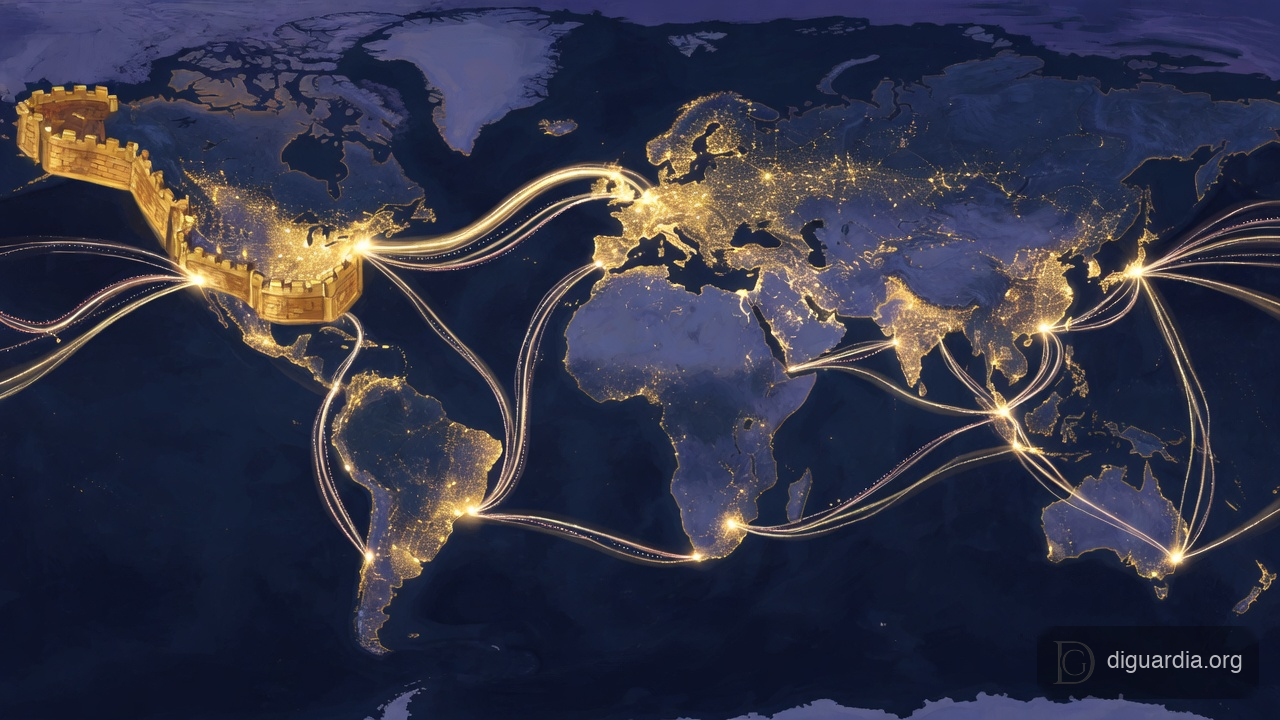
There is a specific thing that happened on Friday that I want to name, because the news cycle will move on quickly and the framing will get fuzzy. A private American company released a model. On the same day, the US federal government took de facto custody of who gets to use it. Not via legislation. Not via a court order. Via a quiet arrangement announced in the launch blog post itself.
That is a meaningful change in how US technology policy works. Past export controls were applied to specific destinations and specific goods, with public processes around them. This is more like a permission layer sitting inside the product itself, administered by an executive branch agency that has not, as of writing, said anything publicly about how that process works.
The reason this matters beyond AI is that it sets a template. If “trust-based access” works for Sol, it works for the next biotech tool, the next defense-adjacent model, the next anything labeled dual-use. The companies that build under it adapt to it. The companies that don’t, build outside it. Pretty quickly you have two software ecosystems: one where you ask Washington for permission, and one where you don’t.
I’m not naive enough to think the second ecosystem is going to be uniformly free, open, and well-aligned. Some of it will be Chinese, with its own gates. Some of it will be European, with its own paperwork. Some of it will be genuinely open weights run on hardware nobody is tracking. The point isn’t that the alternative is utopia. The point is that the alternative now exists, in scale, with capability close enough to the frontier that “just use the US model” stops being the obvious answer for the first time.
Sol is going to be a great model. The people who get to use it are going to be very productive. And the people who don’t, which is most of the planet, are going to spend the next year figuring out exactly how to build serious AI products without it. Some of them will succeed. The ones who do are going to build the thing that comes after this whole architecture.
I’d watch them more closely than I’d watch the launch announcement.
Keep reading